Commercial & Industrial
Industrial Roofing
Contractors
From extreme chemical durability to protecting highly sensitive equipment, our massive structural roofing systems are engineered specifically for large scale industrial operations.
Benefits of Installing a New Roof in Utah
If you are considering updating your home, one of the most effective improvements you can make is a roof installation. Hiring a professional to install a new roof on your home provides a variety of massive long-term benefits:
Massive Scale & Slope
Industrial roofs are usually much larger than typical residential roofs and often feature a low slope or entirely flat surface, requiring significantly more highly specialized and frequent maintenance.
Chemical Durability
Along with normal wear and tear from sun exposure and constantly changing weather, commercial roofing materials must be engineered to aggressively withstand a variety of heavy chemicals, exhausts, and residues from industrial processes.
Sensitive Equipment
Because these industrial buildings often house highly sensitive and incredibly expensive equipment, a severe leaking roof can cause devastating, costly damage. We take uncompromising care to ensure absolute waterproofing.
5 Primary Types of Industrial Roofing Materials
1. Thermoplastic Polyolefin (TPO)
Also referred to as TPO, this single-ply roofing is constructed from a blend of propylene, ethylene, rubber, and fiberglass. Highly resistant to fats and oils, this is the ideal roofing material for restaurants.
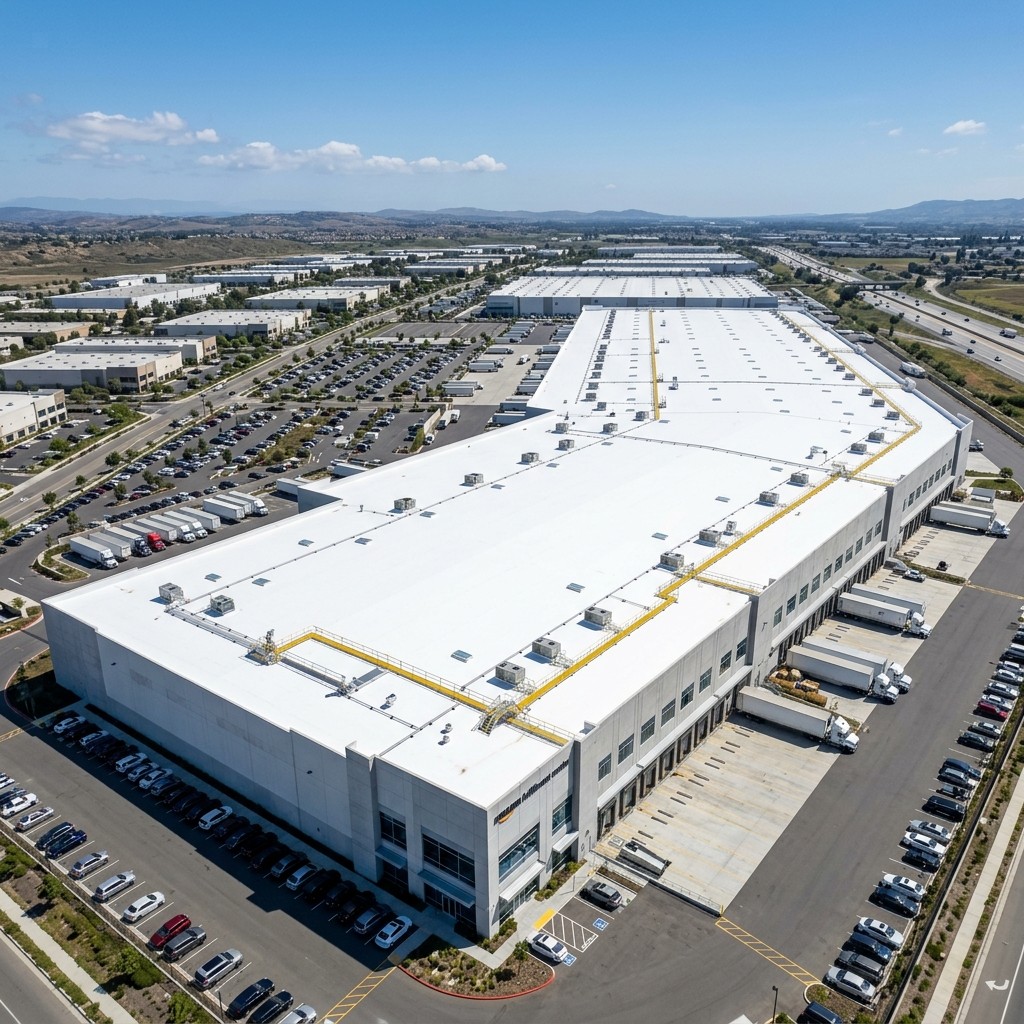
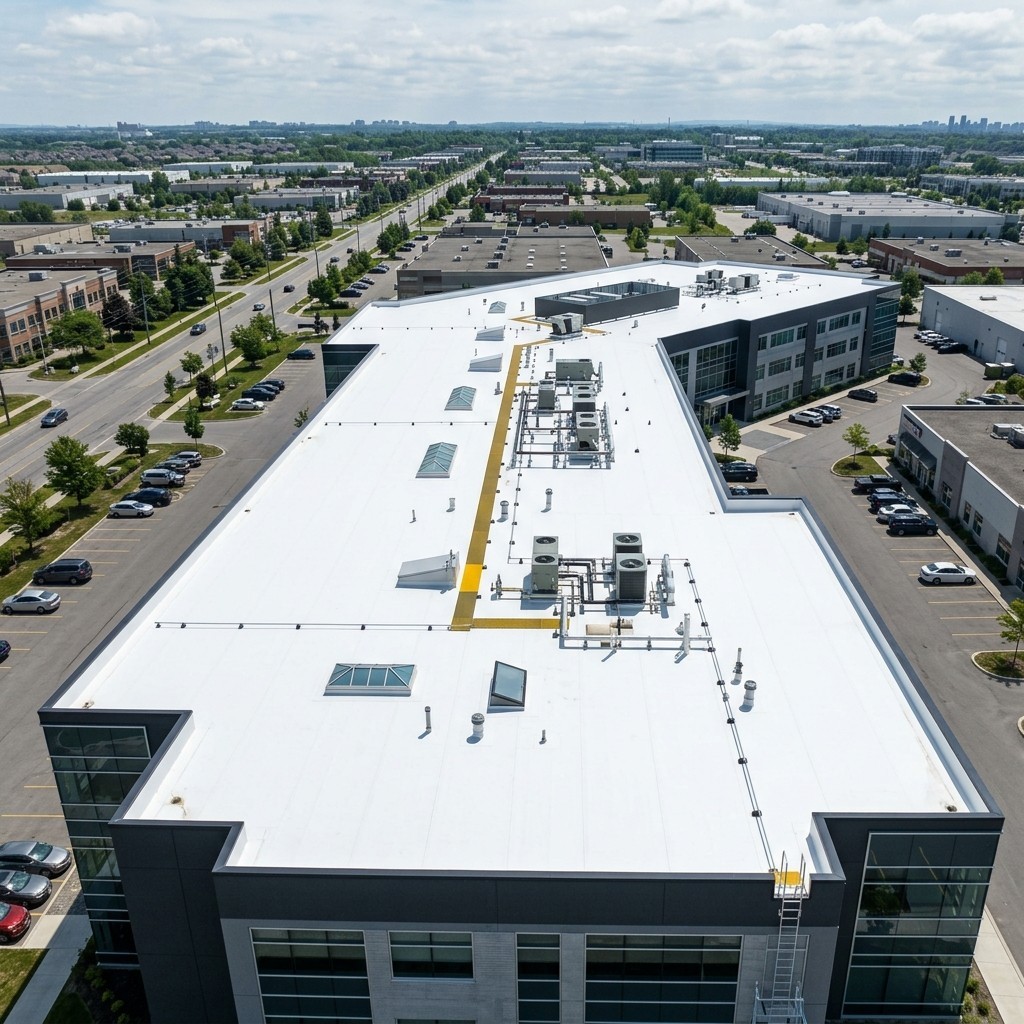
TPO offers one of the highest levels of energy efficiency among single-ply membrane roofing materials and is one of the most common types of roofs found on large commercial facilities. Single-ply membrane roofing materials are sheets of rubber and other synthetic materials that can be chemically adhered, mechanically fastened, or ballasted to insulation to offer protection to a commercial building’s first line of defense against the elements.
TPO is gaining popularity for flat commercial roofs because their single-layer construction is easy to transport and offers a surface that naturally reflects the UV rays of the sun. When a facility owner chooses TPO, they have a few options for their insulation material. The TPO membrane is then rolled out and attached, after which the contractor air welds the seams together with a hot air gun.
2. Thermoset Roofing (EPDM)
Comprised of a single-ply rubber membrane, thermoset roofing is highly resistant to cold, fire, acid, alcohol, and other harsh industrial solvents.
These membranes are chosen due to the extreme durability they offer by combining principal polymers that are vulcanized (cured) or chemically cross-linked. EPDM is the most common type of thermoset roof membrane. As the name suggests, this material is composed primarily of two substances that are derived from natural gas and oil: ethylene and propylene.
Specially formulated tape and liquid adhesives are used by contractors to brutally seal seams in EPDM roofing. Options for installation include ballasting, attaching them mechanically with batten bars, and fully adhering.
3. Standing Seam Metal
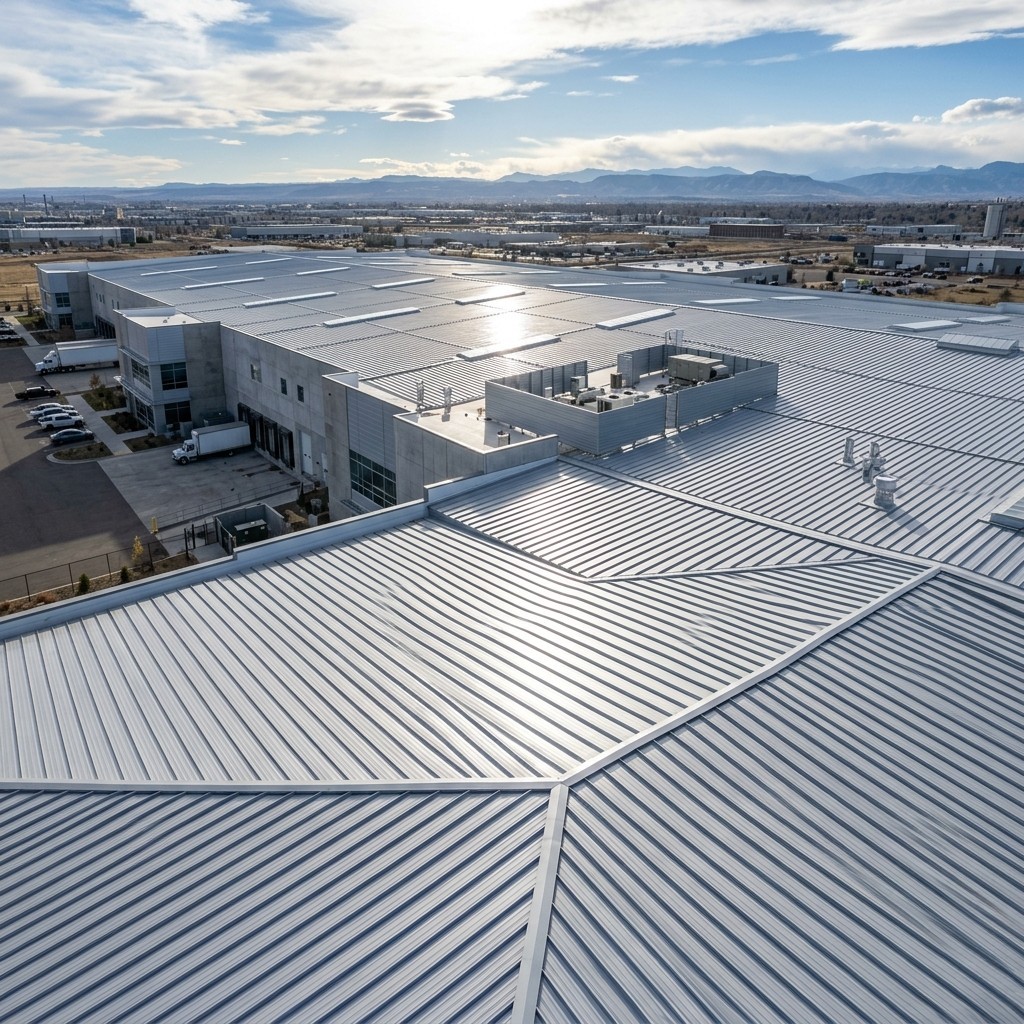
Typically built to resist rust for decades, metal roofing can be made of aluminum, steel, copper, or tin and holds up perfectly under heavy snow accumulation.
The fact that metal roofs can last a century or more is perhaps their biggest selling point in massive commercial applications. These roofs consist of overlapping metal shingles or panels that are fastened to a solid substrate or open framing. Standing seam metal roofing systems are one of the most common options.
These "concealed fastener" roofing systems use hidden clips and flanges to fasten panel seams to open framing. The seam of the panels prevents water from penetrating the roof by standing above the flat surface and completely eliminating the need for external fasteners.
4. Built-Up Roofing (BUR)
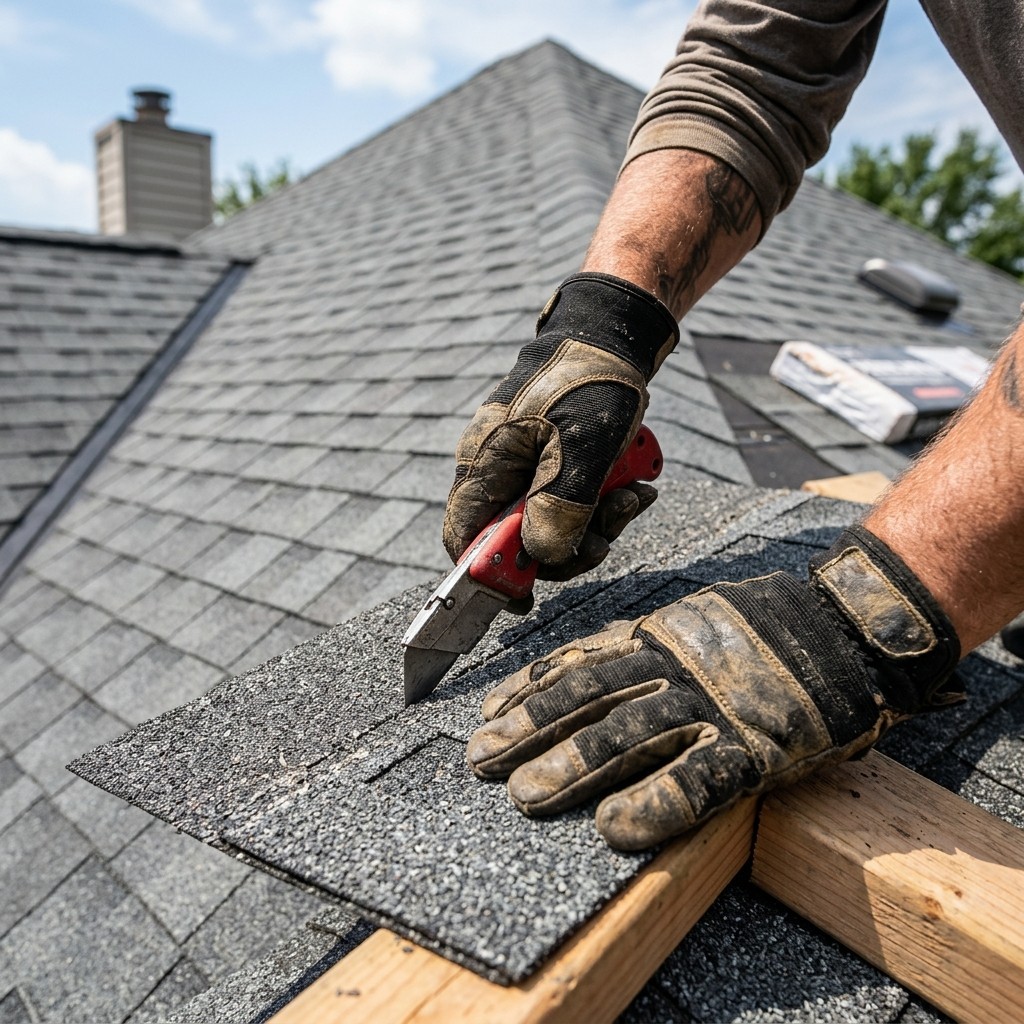
Named after the process rather than the materials, built-up roofing is comprised of extreme multiple layers, with base layers of tar or asphalt permanently covered with a top layer of gravel.
The base of a built-up roof is made of bitumen material, which can be “hot” or “cold.” Hot bitumen is heated to a liquid form during installation, while cold is more akin to a chemical adhesive that doesn’t require heating. Ply sheets that are placed over the bitumen to bond it to the roof are made from tough fabrics reinforced with organic materials or fiberglass.
The top layer of the roof is made from gravel or small stones and completes the look of the roof while brutally protecting the first two layers from extreme foot traffic, falling debris, and intense UV sunlight.
5. Modified Bitumen
Modified bitumen roofs mix bitumen, which is solid petroleum, with another strong reinforcing material, like fiberglass. This material is especially durable when subject to heavy industrial foot traffic.
These types of roofs are a common choice for flat roofs on modern commercial buildings. They are a highly modified version of built-up roofs but offer an intelligent single-ply option. The unique assembly method of this type of roof aggressively increases the roof’s effectiveness against the elements with its strong permutation of layers.
These types of roofs are a common choice for flat roofs on modern commercial buildings. They are a highly modified version of built-up roofs but offer an intelligent single-ply option. The unique assembly method of this type of roof aggressively increases the roof’s effectiveness against the elements with its strong permutation of layers.
Call The Industrial Roofing Pros Today
To learn more about your options for industrial roofing contractors, contact Far West Roofing today by calling or submitting a contact form. Our team of trained, certified experts has over 25 years of experience providing Salt Lake City businesses with the highest quality industrial roofs and the best customer service.
Our Unmatched Commitment
Certifications
Trained and certified by several leading roofing material manufacturers: FiberTite, CertainTeed, Durolast, Carlisle, etc.
Awards
Our commitment to customer satisfaction has paid off! We have an A+ Rating with the BBB, and have been awarded "Best of State" since 2016.
Guarantee
Far West roofing leaves a 5 year warranty on workmanship against leakage. With our materials you also get a manufacturer limited lifetime warranty.